
From Community Health to AI: UCSF Medical Students Put Summer Scholarship into Practice

For UCSF medical student Julieta Muñoz, the summer between her first and second years brought opportunities to connect medical learning with community priorities – in the agricultural fields of California’s Central Valley.
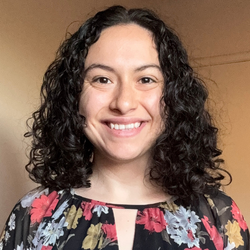
A student in the San Joaquin Valley Program in Medical Education (SJV PRIME), Julieta worked with the California Farmworker Foundation (CFF) to raise awareness about preterm birth. She helped develop educational materials and training for community health workers and joined outreach efforts that brought information and resources directly to farmworkers.
“The most memorable part was the community outreach I did with CFF, where we went out to the fields and delivered this education, along with resources for the farmworkers,” she said. “I felt fortunate to know Spanish because I was able to speak with and connect with them.”
Julieta was one of many UCSF medical students who spent the summer between their first and second years pursuing research and scholarship. Through the Area Health Education Center-affiliated Summer Program Including Research and Community Engagement (ASPIRE) Summer Fellowship, Summer Explore Research Fellowship, and Curriculum Ambassador Program (CURAM), students explored interests ranging from community health and clinical research to data science, artificial intelligence, and medical education—all while working closely with faculty and community mentors.
Together, their projects illustrate the range of research and scholarship students can pursue early in their medical education.
Learning With and From Communities
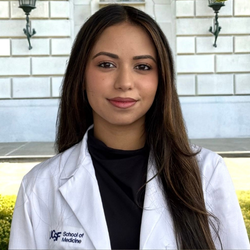
The ASPIRE Summer Fellowship supports UCSF SJV PRIME medical students committed to improving access to high-quality medical care in California’s San Joaquin Valley, combining summer research with clinical and community engagement.
For Julieta, who is interested in obstetrics and gynecology, the experience reinforced the importance of allowing community priorities to guide scholarship—and helped clarify her own future.
“Working on this project has also helped me realize that I want community engagement to be a pertinent aspect of my future career,” she said.
Fellow SJV PRIME student Nirveen Kaur partnered with the National Alliance on Mental Health (NAMI) Merced and United Way Merced on Caring for the Caregiver, developing and piloting a wellness workshop and take-home toolkit for community health workers. Early feedback from the pilot was encouraging.

“Preliminary survey responses showed increases in community health workers’ confidence and knowledge of wellness strategies,” Nirveen said. “Participants responded positively to the intervention, particularly the mindfulness-based, multisensory art activity, describing feeling greater present-moment awareness and relaxation.”
For ASPIRE faculty mentor Leigh Ann O’Banion, MD, associate professor of surgery at UCSF Fresno, seeing students recognize their ability to contribute is among the rewards of mentorship.
“The first summer after their first year of medical school is often when students realize they can contribute meaningfully to improving health care,” Dr. O’Banion said. “Watching them develop confidence, ask thoughtful questions, and recognize that their ideas can directly benefit patients is incredibly rewarding.”
Following Curiosity into Clinical Research
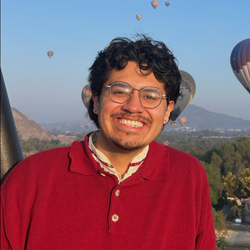
The Summer Explore Research Fellowship gives students eight weeks between their first and second years to pursue health-related research with UCSF faculty mentorship.
Ángel Ortiz participated in Promoting Research Opportunities Fully-Prospective Academics Transforming Health (PROF-PATH) alongside Summer Explore, bringing together interests in orthopedic surgery, health equity and computational research. He examined how well a long-standing pelvic fracture classification system predicts outcomes in older trauma patients—and whether newer clinical data and predictive models could better identify those at risk for serious complications.
“One of the coolest parts has been learning to use PACS (Picture Archiving and Communication System) and read and classify pelvic CT scans,” Ángel said. “Coming into the summer with more experience coding than interpreting imaging, it’s been exciting to develop an entirely new set of skills.”
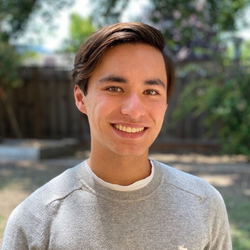
Liam Magee used clinical and imaging data from patients with brain tumors to develop machine-learning tools intended to help clinicians estimate how individual patients might respond to different treatment strategies.
“Working so closely with patient data has pushed me to think much more critically about how clinical decisions are made and where there’s still room for improvement,” Liam said. He hopes to carry that curiosity into his medical education and continue pursuing research that addresses challenges in care delivery.
Beyond individual projects, Summer Explore mentors emphasize the rigor required to produce research that can inform care. Brian Anderson, MD, associate clinical professor of psychiatry and a faculty mentor in the program, explained:
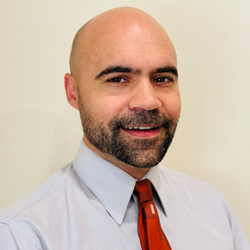
“I hope they learn an appreciation for the work and time it takes to generate meaningful, community-centered data that can inform patient care and future research questions,” Dr. Anderson said.
Exploring AI and the Future of Medical Education
Other students investigated how medical education itself can evolve—including how emerging artificial intelligence tools can support learning.
Through UCSF’s Curriculum Ambassador Program (CURAM), students work with faculty mentors to identify opportunities for curricular improvement and develop and implement educational innovations.
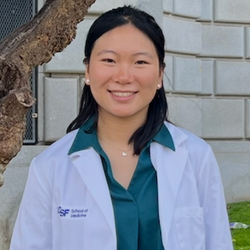
Andrea Huang worked with faculty mentor Justin Sewell, MD, PhD, professor of medicine, to create a Core Inquiry Curriculum session focused on teaching first-year medical students responsible AI practices for medical inquiry. Her project explored how students can learn to use the technology effectively and analytically.
The experience also changed the way she thinks about her own education.
“Learning more about the breadth and depth of pedagogy dedicated to teaching adults was very surprising,” Andrea said. “As adults, we have more autonomy, responsibilities, and a better understanding of what we need to succeed.” Her experience has led Andrea to pay closer attention to the educational strategies faculty use to support medical student learning.
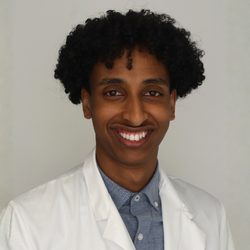
Hiab Assefa Ghebregherghis worked with faculty mentor Christy Boscardin, PhD, professor of medicine and director of Artificial Intelligence and Assessment for Medical Education, to implement a customized AI tool that guides preclinical students through board exam-style questions and helps them organize clinical knowledge into patterns used to recognize disease. The project aims to support the transition to clinical learning and preparation for board examinations.
Hiab entered the summer expecting primarily to learn from experienced educators. Instead, he discovered that his own perspective mattered.
“I thought I would be in ‘the background’ to learn from the experts, but I really felt like I was an important part of the team,” he said. “This experience really built my confidence for future projects.”
Exploring What Comes Next
For students considering summer scholarship, participants offered practical advice: start early, seek out mentors and remain open to projects that may evolve. O’Banion emphasized that curiosity, humility, initiative and resilience matter more than prior experience.
Across these experiences, students contributed to community programs, investigated clinical questions and helped shape how future classmates will learn – gaining a clearer sense of the roles scholarship could play in their careers.


