Practicing Compassion Through Communication and Collaboration: 2026 UCSF School of Medicine White Coat Ceremony
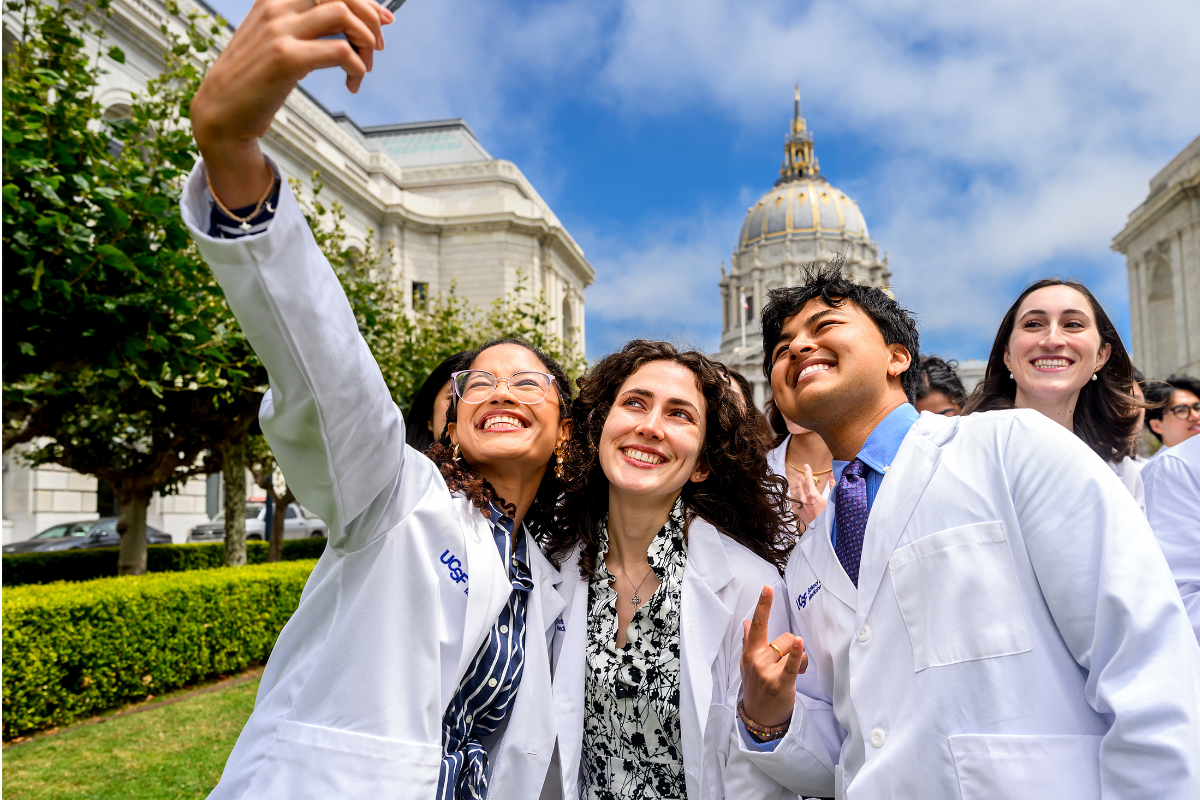
Joy, trepidation, and resolve mingled in the air as students lined the hallway of Herbst Theatre, waiting to take one of the first steps in their journeys as future physicians and scientists.
Throughout the ceremony, speakers reminded students that wearing the white coat carries responsibilities beyond acquiring medical knowledge: listening with curiosity, collaborating with others, and approaching patients and communities with humility and compassion.
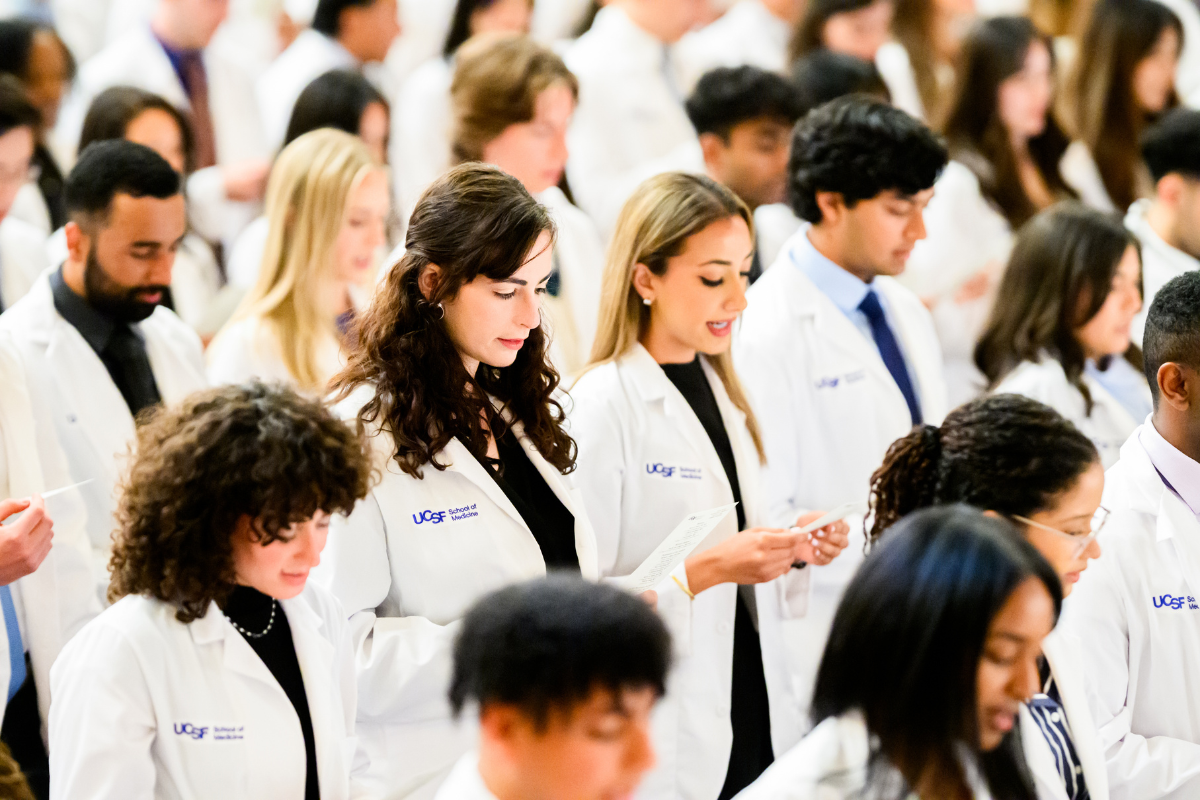
The 180 students in the Class of 2030 received their white coats – a traditional rite of passage for new medical students – at a ceremony on August 7, 2026. Erick K. Hung, MD, Associate Dean for Students, and Anna Chang, MD, Associate Dean for Curriculum, read each student’s name as they crossed the stage, smiling and waving to their loved ones in the audience. Students were coated by Michelle A. Albert, MD, MPH, Associate Dean for Admissions, and Peter Chin-Hong, MD, Associate Dean for Regional Campuses.
The Class of 2030 arrived at UCSF through many different paths. Selected from more than 11,000 applicants, students described being drawn to UCSF by its academic excellence and genuine commitment to the people it serves.
"Witnessing how UCSF works alongside the communities it serves showed me this is where I truly belong," said Kaela Koiné Evans, a student in the UC Berkeley-UCSF Joint Medical Program (JMP).
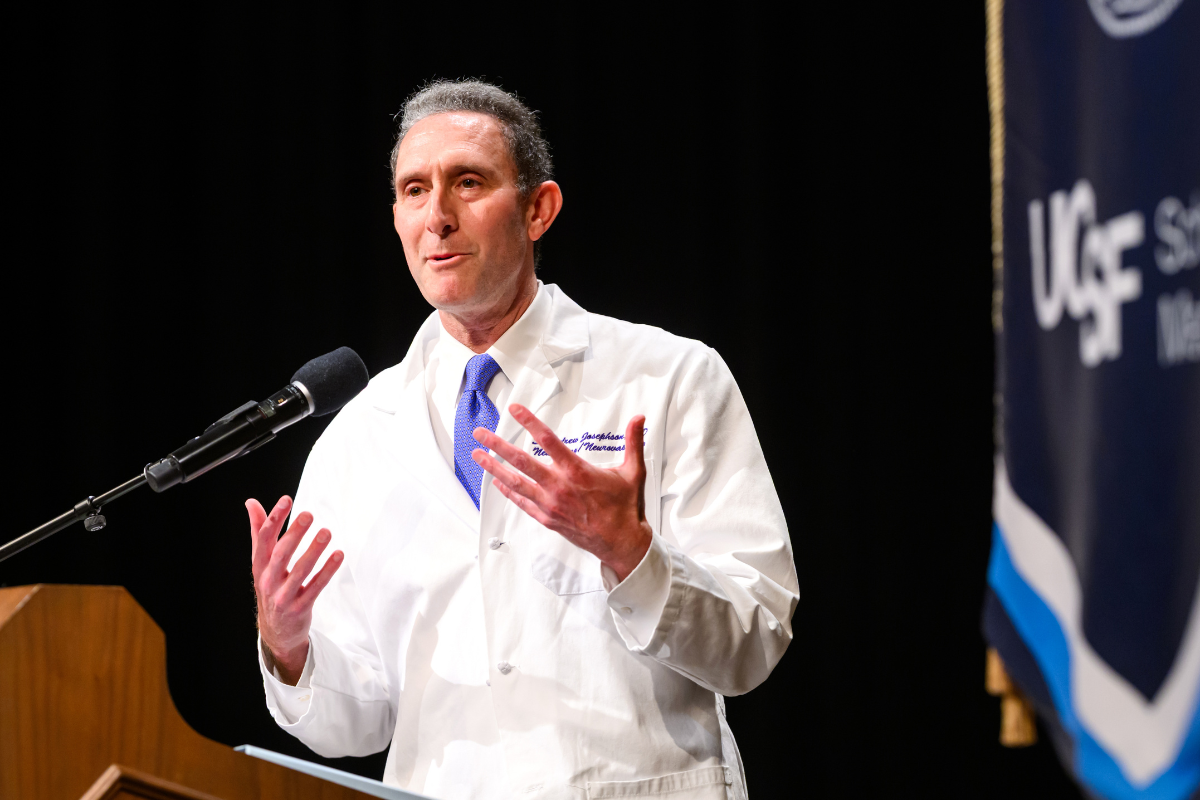
The ceremony also marked a milestone for School of Medicine Dean S. Andrew Josephson, MD, who began his tenure in July 2026 and welcomed the incoming class at the White Coat Ceremony for the first time as dean. He shared a humorous story about receiving his own white coat, which involved simply retrieving it from a shelf and removing its plastic covering. He and Vice Dean for Education, Karen E. Hauer, MD, PhD, also greeted the newly coated students as they left the stage.
In his remarks, Dean Josephson emphasized the sense of purpose that brought the students to medicine and the responsibility they were taking on as future physicians.
“If you didn’t want to work to change the world and the lives of so many, you wouldn’t do this, but the choice you have made is one that few make,” he said. “You have dedicated your lives to healing, to care, to compassion, and that journey doesn’t end today—it really begins today.”
Listening as an Act of Care
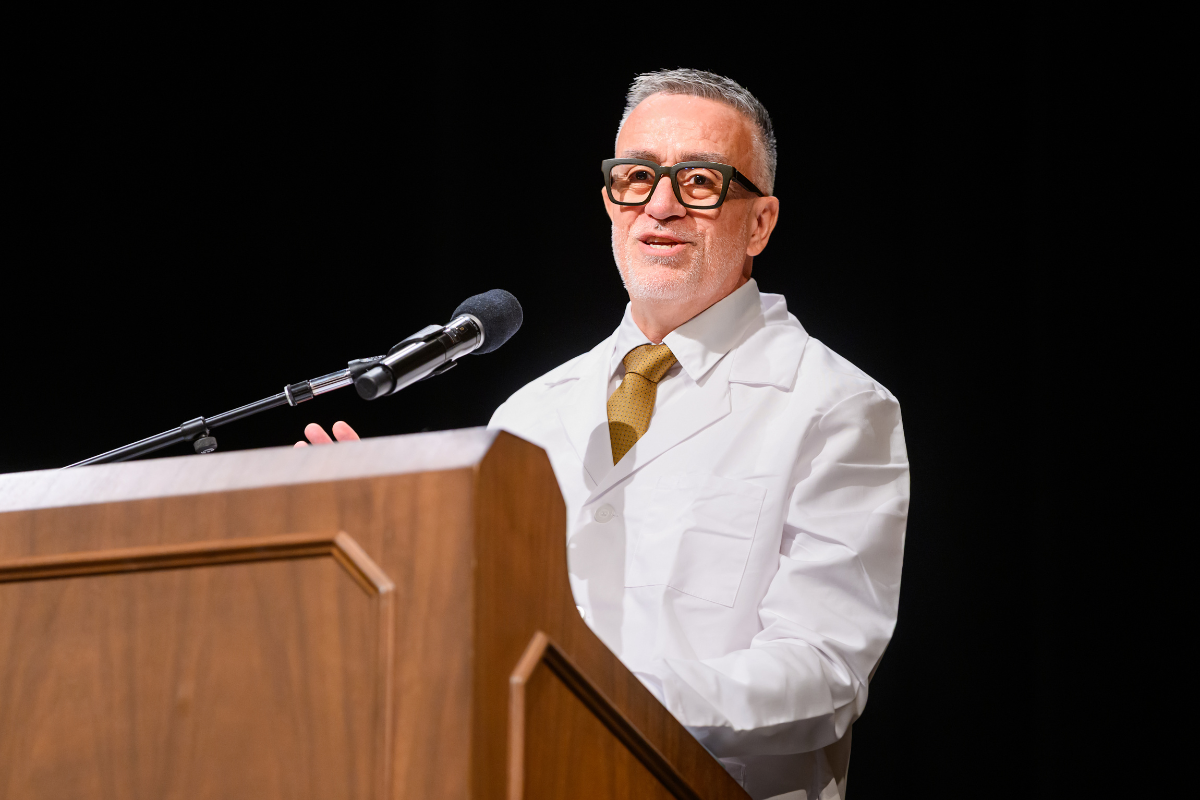
Caring for others – especially those who are most vulnerable – was central to the keynote address from José M. Barral Sánchez, MD, PhD. Dr. Barral Sánchez serves as the Vice Dean of the UCSF School of Medicine Regional Campus at Fresno and has contributed major research on the science of neurodegenerative disorders.
He invited all students to consider training experiences at UCSF Fresno when they enter their clinical years and encouraged them to help address the inequities affecting communities such as those in the San Joaquin Valley. The region faces a significant physician shortage, and, in some areas, an average life expectancy 20 years shorter than in more-resourced parts of California.
Addressing those inequities, Dr. Barral Sánchez told students, begins with understanding the individual circumstances of each person they serve. He encouraged them to approach every patient with compassion and genuine curiosity, asking questions that illuminate the factors affecting their health and care.
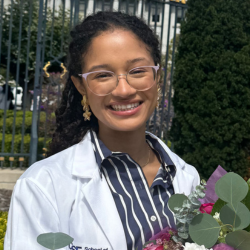
“Do not just hear and transcribe what they are saying. Listen to them.”
The Responsibility Behind the White Coat
David Campa, MD, MPH, president of the UCSF Medical Alumni Association and member of the Class of 1989, presented the students with their white coats. UCSF held its first White Coat Ceremony in 1993, and the coat has since “come to represent the knowledge, wisdom, skill, and integrity of our profession,” he said.
For many students, their new white coat symbolized not only their entry into the profession, but also the responsibility they were assuming toward their future patients.
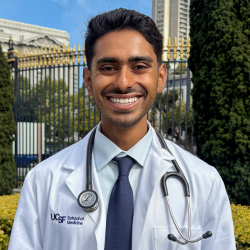
Lisbette Acosta said her love of medicine was passed down from her mother, who was a physician in the Dominican Republic. As the first person in her family to pursue medicine in the United States, Acosta also recognizes that the white coat may be associated with a difficult or vulnerable moment in a patient’s life.
“It is a privilege that one needs to wield very wisely and carefully,” she said. “For me, it means pride, but it also, most importantly, means humility in knowing that I have a lot to learn.”
For Sameer Ahmed, a member of the Program in Medical Education for the Urban Underserved (PRIME-US), that responsibility includes building trust and ensuring patients feel heard. He was inspired by his mother, a dentist who modeled a strong commitment to patients that extended beyond clinical care.
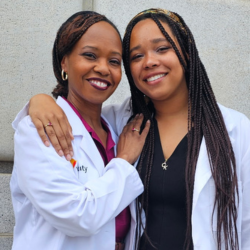
“Because of her, I aspire to be the kind of physician who not only treats illness, but earns trust, advocates fiercely, and ensures every patient feels seen, heard, and valued.”
Healing Begins with Presence
Those same values of humility, curiosity, and connection were already taking shape during the students’ first week at UCSF. During Launch Week, they learned not only about UCSF’s Bridges Curriculum but also about their classmates and communities on a more personal level.
Kaela Koiné Evans, believes that the humility and willingness to learn that she hopes to bring to her relationships with classmates and care teams will also serve her patients and their communities.
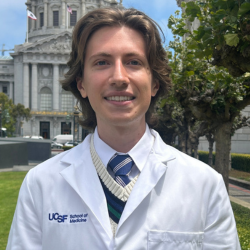
“The Latin roots of compassion mean ‘to suffer with,’ reminding me that healing begins with presence,” she said. “Through honest communication and genuine collaboration, patients can feel heard, respected, and supported as partners while navigating uncertainty, illness, and recovery together.”
Students also found the spirit of collaboration within the UCSF community. The potential to combine science and medicine to advance patient care led Daniel Capuzzi to pursue the Medical Scientist Training Program (MSTP), and the community ultimately convinced him to come to San Francisco.
“I chose UCSF for the people,” he said. “The faculty and students I met on the interview trail were some of the most passionate, supportive, and knowledgeable people I had ever encountered.”
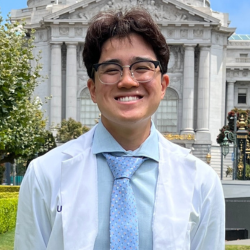
That emphasis on collaboration extends to how students will learn at UCSF. Wilson Hinh, a student in the San Joaquin Valley Program in Medical Education (SJV PRIME), expressed appreciation for a learning environment designed to help every student succeed. Each first-year medical student, for example, joins a small group led by a dedicated physician coach who will guide its members throughout medical school.
“Between my coach, mentors, and fellow classmates, everyone is so supportive, and it feels like the right environment to learn and grow.”
A Declaration of Service and Gratitude
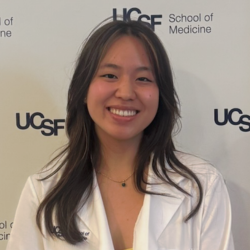
Dr. Albert returned to the podium to lead the students in reciting the UCSF Physician Declaration, a promise to serve patients that they will recite again at graduation, bookending their medical education at UCSF.
Together, the students pledged themselves to the service of humanity before turning once more to the family, friends, and loved ones who had helped bring them to this moment. The audience rose in a standing ovation.
“In that moment, all I felt was gratitude,” said Chelsea Wu. “Gratitude to fulfill our purposes as healers alongside such amazing classmates, gratitude to my family and partner, gratitude to the physicians that came before and those that will rise after, and gratitude to the patients that have and will let us into their lives.”