
The DNA of the AME: Ann Poncelet on Building People, Programs, and Community

Ann Poncelet MD
A left-handed, geeky steel town girl bound for California
Many of us may recall a teacher who had an early impact on us, by lifting us up and believing in us when we wanted to hide. For Ann, this person was her third-grade teacher, Mrs. Kissick. "I was lefty and geeky, and she made me feel good about being smart. I grew up I Pittsburg, a steel town. I was like a fish out of water, but Mrs. Kissick reinforced my love of reading and math". Ann recalls a certain air of freedom, riding her bike all over the neighborhood until dinner time. It was also the seventies and a time of intense racial tensions and riots. Her parents intentionally had Ann meet a diversity of people and gave her a sense of her own accountability and role in racial dynamics. After graduating from high school, Ann knew she was destined for San Francisco, but she made a detour to Maine, where she attended Colby College, a small college where she could have relationships with professors and where the focus was really on the students. She notes that she learned to write as a government major and is grateful for all the support she received when she became excited about the brain and switched to pre-med late in college.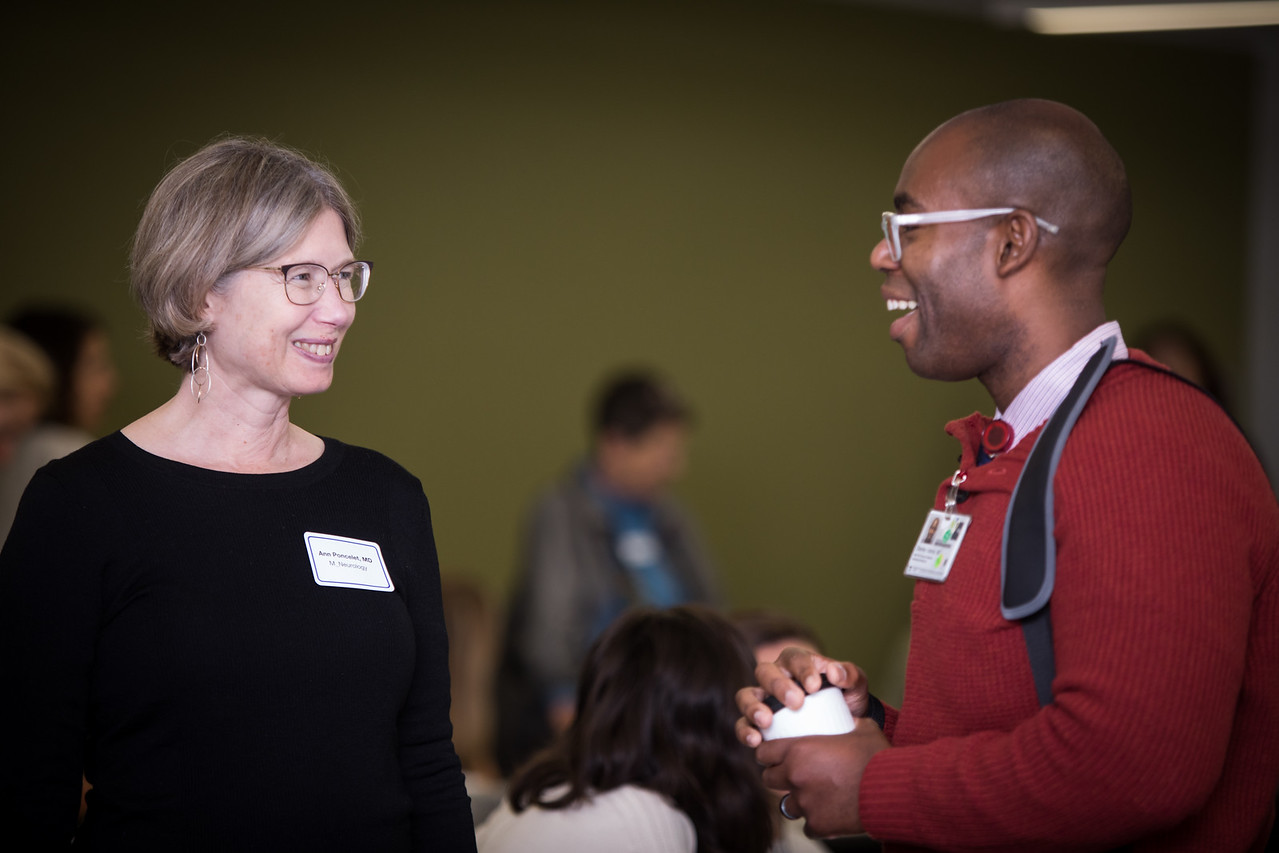
Ann eventually made it out to San Francisco, working for a year in a research lab at Langley Porter before starting as a UCSF medical student in 1984. Her time on her senior rotations at Zuckerberg San Francisco General during the early AIDS epidemic still shapes her today. "Young men were dying, and the Pope refused to see these patients because they were sinners," she recalls. "Those patients taught me how to die with dignity." She has carried that experience through years of caring for patients with ALS, and she sees echoes of it in the disruption and uncertainty of the pandemic - a reminder that "sometimes it’s about the stars aligning, and sometimes it’s a rough go, and you have to adjust."
The Friday 5pm case sparked the idea for integrated clerkships
Ann’s path into medical education leadership was not planned. As a junior faculty member, she imagined herself becoming a clinical researcher. Instead, while serving as the neurology consultant at ZSFG, she found herself supervising a fourth-year medical student through a psychotic break, an experience that put her in touch with the dean of students and, from there, on the school’s screening committee. That connection led the neurology clerkship director to recommend her to the department chair as the next clerkship director. "They asked me, ‘Would you rather be the new clerkship director or the clinic director?’ I didn’t even know how to ask about FTE or anything like that," Ann laughs. "I just had passion, love for the students, and the experience of having been a student here myself."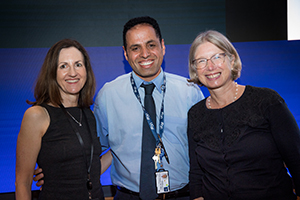
It was a fateful Friday evening in the Ambulatory Care Center when Ann was asked to consult on a patient, which led to the concept of integrated clerkship experiences. “I was asked to check on a patient who ended up in myasthenic crisis, left against medical advice, and reentered the hospital in psychosis" That led Ann to approach faculty educators in the department of psychiatry about opportunities for integrated learning experiences and ultimately led to a lifelong friendship, creative partnership, and peer mentoring relationship with Dr. Lowell Tong in the Department of Psychiatry. Together, they launched "Wednesday Night Live" sessions featuring pizza and case sharing for students. Going to the Harvard Macy Institute together was a major turning point in Ann’s career and her first introduction to educational scholarship. Afterward, they were tasked with leading a group to reimagine the third year of medical school and produced the principles that underpinned the integrated clerkship concept and laid the groundwork for PISCES (Parnassus Integrated Student Clinical Experience).
A reflection on the DNA of the AME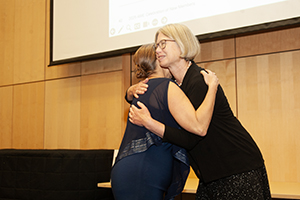
Along with other early collaborators in transforming undergraduate medical education, Ann joined the inaugural 2001 AME class. “It felt like the wild west…very creative...not knowing if we were going to get promoted.” The landscape of medical educators had changed dramatically by the time Ann became the third director of the AME in 2016. When asked if anything surprised her about the role, Ann smiles, “Maybe not surprising but amazing… the AME is an amazing group of people with high-quality staff.” And then she adds, with reflection, that the learning curve is steep.“What I did not appreciate from the outside is the time it takes to support twenty-four endowed chairs and the intentionality to have feedback be a part of every program. For example, if someone does not get into the AME, it takes time to have that personal, intentional feedback. I call everyone personally.” Ann recalls that the ethos of supporting people to grow and providing coaching stems from AME’s origins as a selective organization with the idea of making education a promotable path. When we give service awards and write endowed chair stewardship letters, she sends them to department chairs. When processes may feel inefficient or take too much time, she replies, “This is part of our DNA, and getting tangible feedback is part of that."
Building off the foundation laid growing up in Pittsburg in the 70s, Ann continued to expand the integration of DEIA into AME’s infrastructure, launching the DEIA action group with a supported leadership position, supporting the holistic review in the AME selection process and transforming the Endowed Chair selection process, so that the process reflected AME values with transparency and accessibility to every eligible person. “Our structures have racism built into them, and, if you don’t see them, you are not paying attention.”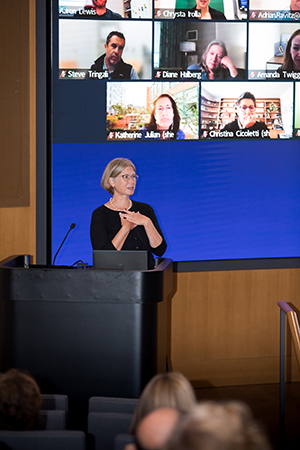
Looking back, Ann feels a real sense of accomplishment, tempered by the honest acknowledgment that there is always more that could have been done. She wishes she could have gotten the graduate division more engaged with the AME, at a time when many still saw education as work for the one or two people willing to take it on, rather than a skill every scientist should build. And she is candid about where she sees her own strengths sitting now, ten years in. When she handed off PISCES to Maria Wamsley and Joe Sullivan, they optimized it in ways she is not sure she would have. "I wonder if I’m not as good at the optimizing part," she reflects. "I’m more drawn to the building." She feels this is the right time… the perfect time… for a new leader to carry the AME forward.
Family, letting go, and most importantly, gratitude.
On reflection, she knows that this career path meant that she was not with her family all the time, and that part of that was good for her. And now she wants to be available to and with the people she loves..., and she wants to travel. She also recognizes that she must let things go. Being more senior and knowing people had affordances where she could have influence. “With the new family leave policy, I asked if the RVUs (Relative Value Units) would be adjusted, and I advocated for it (to be adjusted.) I was in the room to raise my hand. And I will not have that voice anymore. I can nudge from the outside, but I am not at the table and will have to let things go. It is not my job anymore.” Of course, Ann is not completely letting go. She will return to support the new AME director and the new director of the Brachial Neuritis Center and has already accepted opportunities to teach.
What stays with her most, she says, is gratitude - for a role that lets her meet people she never would have otherwise - patients, colleagues, learners, and staff. And she knows she will need to find ways to put herself in places where she is a part of a greater community, like she has here. “The most important thing is the deep gratitude I feel."


