
127 Second-Year UCSF Medical Students Showcase Research at Annual Summer Explore Symposium
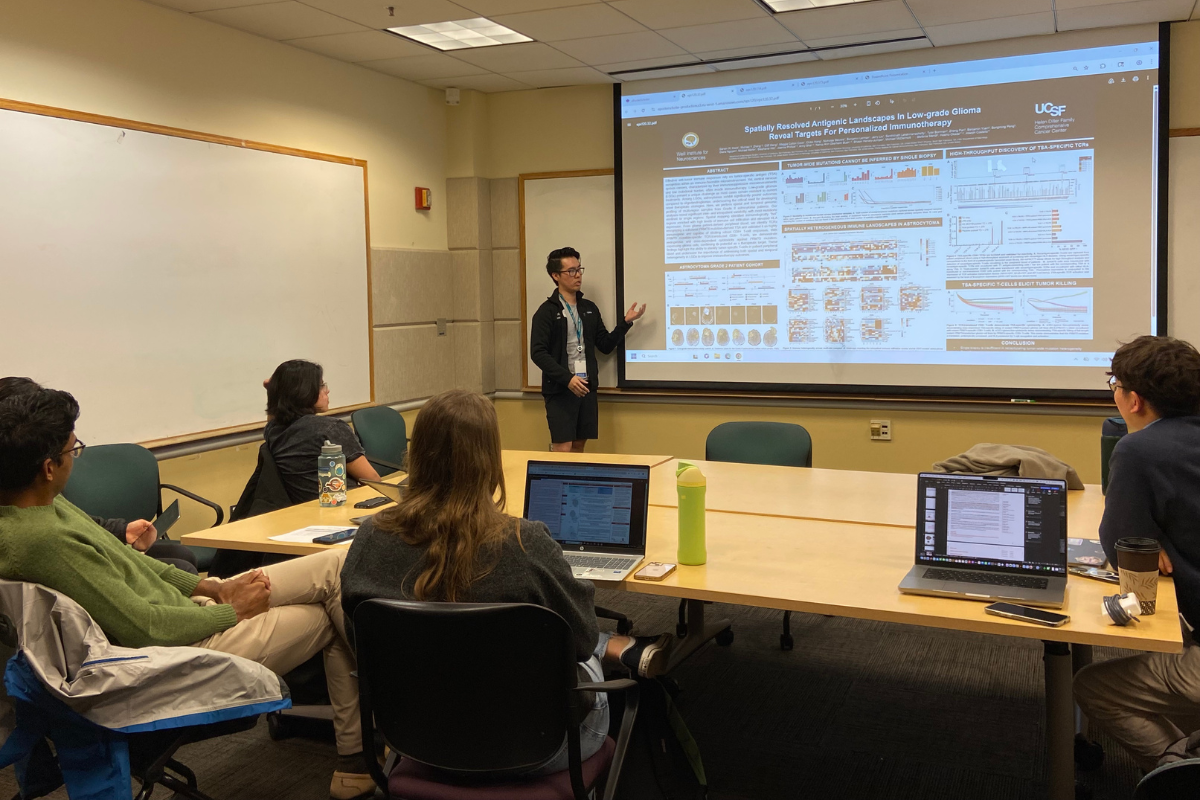
In mid-December, following their summer research experience, 127 second-year UCSF medical students presented their research at the four-day Summer Explore Research Conference, hosted by the Inquiry Curriculum at the UCSF Parnassus Heights campus.
Students showcased projects spanning clinical, basic science, education, and social science research, with topics ranging from quality-of-life outcomes for patients with psoriasis in Kenya to the use of large language models (LLMs) to predict post-operative risk after lung resection, and the efficacy of CAR-T cell therapies for pediatric Burkitt leukemia.
The Summer Explore Research Fellowship is an eight-week, optional period of scholarship between the first and second years of the Bridges Curriculum. The program encourages students to follow their curiosity and sense of discovery as they explore potential career paths in research, education, and academic medicine.
The Inquiry Funding Office awards a $5,000 Summer Explore stipend, and this year, 85% of student applicants received funding. Other funding sources included the Diane Sklar Global Health Initiative, the Greenberg Oncology Medical Student Summer Fellowship, the Harold Varmus Endowed Fund for Global Health Scholars, PROF-PATH, the UCSF Innovation Ventures Catalyst Award, and various mentor and donor funding.
Dr. Mallar Bhattacharya, MD, Inquiry Funding Director, emphasized the program’s formative role in medical education. “Summer Explore plays a critical role in shaping students into physician-scientists and innovators,” he said. “Engaging in original research trains students to think like scientists—to formulate hypotheses, design methods, analyze data, and interpret results—skills that directly translate to evidence-based clinical practice. Early hands-on experience helps students clarify whether they are drawn toward basic science, clinical investigation, public health, or translational research — often influencing residency choice and career emphasis,” he added.
Reflecting on the program’s impact, medical student Alina Feng shared, “My experiences in Summer Explore have strengthened the skills and confidence to lead research questions of my own. For the first time, I felt empowered to not only develop, but also lead and carry out an idea based on gaps I observed within medicine. Seeing the products of my research for others to learn and build upon has been very rewarding.”
Dean’s Prize in Short-Term Research Awards
As part of the Inquiry Awards, the Dean’s Prize in Short-Term Research was awarded to five medical students who demonstrated outstanding scholarship. Awardees were chosen based on the strength of their abstract, their mentor’s nomination, and a successful presentation to the faculty review committee.
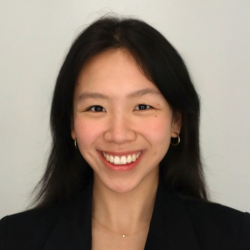
Alina Feng, mentored by Wilson Liao, MD, and funded by the Summer Explore Research Fellowship.
Association of Sociodemographic Factors with Health Care Utilization and Treatment for Psoriasis
Alina is an aspiring clinician-scientist who is drawn to research that builds directly on daily practice and advances our understanding of how to deliver meaningful, compassionate patient care. Her research interests focus on improving the safety, efficacy, and access to novel therapies to treat inflammatory and autoimmune skin conditions.
Her research project examined patient access to biologic therapies, highly efficacious but costly therapies, for treating severe or refractory psoriasis. Using one of the largest nationally representative datasets in the United States, she found that Hispanic psoriasis patients receive biologics at significantly lower rates than other patient subgroups, despite having higher overall engagement with the health care system. Her findings were published in the Journal of the American Academy of Dermatology and will become the foundation for ongoing research projects around biologic efficacy, access, and regulation that she is leading.
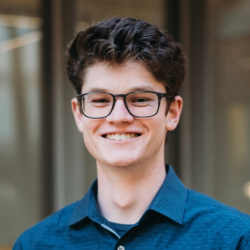
Griffith Hughes, mentored by Geoff Tison, MD, MPH, and funded by the UCSF Summer Explore Research Fellowship.
Improving Ventricular Tachycardia Detection in the ICU with ECG Foundation Models
Griffith enjoys research that addresses real-world patient needs and improves our understanding of both underlying diseases and the tools used to address them. His research interests include cardiology, including how to use the information collected by patient monitoring devices (e.g. ECGs, pulse oximeters, arterial pressures) to predict or detect cardiac diseases and how to utilize machine learning algorithms to harness underutilized healthcare data to identify earlier patient interventions.
His research project aimed to improve ventricular tachycardia (VT) detection in the Intensive Care Unit (ICU) using a deep learning foundation model pretrained on millions of standard 12-lead ECGs in continuous ICU ECG data. He found that his trained algorithm showed increased accuracy and detected VT on a real-world prevalence dataset with a much greater positive predictive value than the existing rules-based algorithms. Griffith plans to improve his machine learning algorithm by incorporating additional UCSF ICU data. He plans to write a manuscript on his findings.
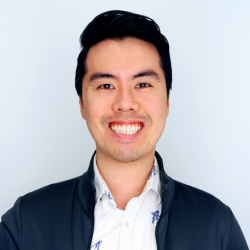
Darwin Kwok, PhD, mentored by Hideho Okada, MD, PhD and Joseph Costello, PhD, and funded by the UCSF Innovation Ventures Catalyst Award grant with presentation supported by the AACR Scholar-in-Training award, ASCO Conquer Cancer Merit Award, ARCS Michele Goss Scholarship, T32 NIH Training Grant, Gianna Rae Meadows Grant for Oligo Cure, and the UCSF Summer Explore Fellowship.
Spatially Resolved Antigenic Landscapes in Low-Grade Glioma Reveal Targets for Personalized Immunotherapy
Darwin enjoys that science provides the opportunity to make new discoveries that compel him to think in unconventional ways and to see the world differently. His research interests include discovering novel cancer targets and engineering next-generation immunologic therapeutics.
His project focuses on elucidating the spatiotemporal mutational and immune landscape in low-grade gliomas to design improved immunotherapies. Analysis of genomic and transcriptomic sequencing from approximately 10 intratumoral spatially-mapped biopsies across each of their seven WHO Grade II astrocytoma patients revealed significant mutation and immune cell heterogeneity within the same tumor; this heterogeneity defined highly and lowly infiltrative immune niches that seemingly sculpt the mutational landscape from the primary tumor to recurrence through immune editing. Darwin plans to submit his manuscript for publication and continue advancing his novel neojunction-specific TCR therapy into clinical trials and a potential spin-off as a co-principal investigator of the UCSF Catalyst Awards.
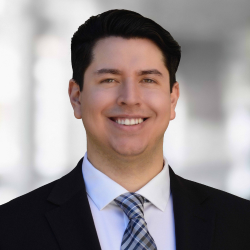
Christopher Orozco, mentored by Lauren Shapiro, MD, MS, Thomas Peterson, PhD, Alicia Fernandez, MD, and Rachiel Gottlieb, MD, and funded by the PROF PATH, Summer Explore Fellowship, and the MSK Research Scholar Award.
Disparities in the Utilization of Wide-Awake Local Anesthesia Hand Surgery
Chris enjoys designing a project around a meaningful question and interpreting the findings in the context of the existing literature. His research interests include orthopedic surgery and understanding health care disparities, including learning about advancements in the field and the potential to improve health care access and equity.
His research project assessed utilization rates of wide-awake hand surgery among patients with diverse language preferences by analyzing data from the six University of California academic medical centers for common hand procedures, including carpal tunnel, trigger finger, and De Quervain’s releases. He found that patients with a Spanish language preference and Hispanic patients were more likely to undergo wide-awake hand surgery. Chris plans to refine the data and submit his work for conferences and manuscript publication.
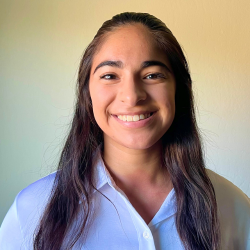
Andrea Sandoval Rivera, mentored by Anushree Agarwal, MD, MBBS, and funded through the PROF-PATH Program.
The Impact of Income, Education, Race, and Ethnicity on Patient Engagement in Adult Congenital Heart Disease Care
Andrea enjoys learning new skills by collaborating with others toward a shared research goal. Her research interests include cardiology, heart disease, and the impact of social determinants of health.
Her project investigated the impact of social determinants of health on patient engagement in adults with congenital heart disease. She discovered that education and household income have significant correlations with a patient’s level of engagement with their health. Andrea currently aims to curate a manuscript with a full analysis characterizing the relationship between patient engagement and social determinants of health.
The Value of Mentorship
Summer Explore faculty mentors represent a wide range of fields and disciplines across medicine and academia, and many were once mentees themselves.
Amanda Bryson, MD, MPH, Assistant Professor of Pediatrics, shared that she sees medical student mentorship as invaluable. She added, “I was fortunate to receive strong research mentorship as a medical student, which shaped my career trajectory and fostered a lasting passion for scientific inquiry.”
Dennis Oh, MD, PhD, Associate Professor of Dermatology and mentor of 25 years, said, “Mentorship allows students to explore research in areas that may be less familiar to them and gives mentors an opportunity to work with students who bring energy and sometimes new perspectives to the work.”
Nicole Jiam, MD, Assistant Professor of Otolaryngology, added, “More than producing data and scientific discovery, mentorship helps trainees develop confidence, intellectual ownership, and a sense of belonging in academic medicine. It gives students the courage to ask hard questions, persist through uncertainty, and envision themselves as future clinician-scientists.”
Faculty Mentor Awards
In addition to student awards, the Inquiry Curriculum presented Exceptional Mentorship Awards to faculty recognized for their dedication to nurturing future leaders, innovators, advocates, and researchers at UCSF. This year’s awardees are:
Jeannie Bailey, PhD, Associate Professor of Orthopaedic Surgery. Nominated by Aniket Pratapneni, MS2.
Amanda Bryson, MD, MPH, Assistant Professor of Pediatrics. Nominated by Claire Stewart, MS2.
Melissa Conrad, PhD, MS, Associate Professor in Residence. Nominated by Fatima Elzamzami, MS2.
Carly Demopoulos, PhD, Associate Professor of Psychiatry and Behavioral Sciences. Nominated by Flora Jin, MS2.
Nicole Jiam, MD, Assistant Professor of Otolaryngology. Nominated by Connie Chang-Chien, MS2.
Jeremy Juang, MD, PhD, Associate Professor of Anesthesia. Nominated by Austin Zheng, MS2
Wilson Liao, MD, Professor of Dermatology. Nominated by Miranda Chen, MS2 and Alina Feng, MS2.
Dennis Oh, PhD, MD, Associate Professor of Dermatology. Nominated by Flora Wong, MS2.
Lauren Shapiro, MD, MS, Associate Professor of Orthopaedic Surgery. Nominated by Arezo Ahmadi, MS2, and Christopher Orozcos, MS2.
Mary Jue Xu, MD, Assistant Professor of Otolaryngology. Nominated by Laura Chen, MS2.


