
Bridging Science and Medicine in UCSF’s MSTP Program

MSTP students Jolade Adebekun, Kai Trepka, and Theo Michaels. All photos by Lorraine Hart.
In 1970, UCSF proudly marked the conclusion of the first year of its newly formalized Medical Scientist Training Program (MSTP), a pioneering initiative co-sponsored by the UCSF School of Medicine and the Graduate Division. As one of the early institutions to adopt this NIH-funded program, UCSF helped define what it means to train physician-investigators – clinicians whose research advances the frontiers of biomedical science.
Launched during a time of academic transformation, UCSF’s MSTP was built to modernize the integration of scientific and clinical education. From its inception, the program has aimed to equip students with the tools to tackle the most complex challenges in medicine through rigorous research, translational insight, and patient care.
Today, UCSF’s MSTP is consistently ranked among the top programs in the country, with faculty and students who push the boundaries of discovery across the biological and social sciences. What sets UCSF apart is its expansive scientific landscape and culture of mentorship, which allow students to pursue research that spans bench to bedside – and often beyond.
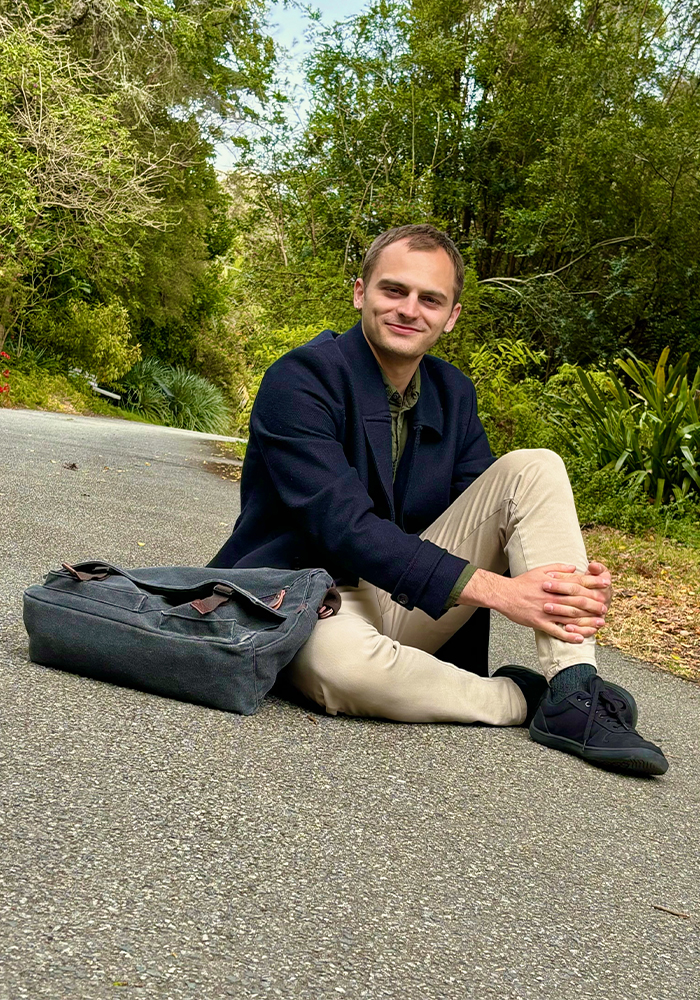 Theo Michaels, a current MSTP student, hikes down a well-worn path in Golden Gate Park, a source of respite and renewal just a few blocks from the UCSF Parnassus campus. He’s far from where he grew up in rural Massachusetts, surrounded by his family’s cows, chickens, and bees. Having completed a year and a half of pre-clinical studies, Theo is now immersed in clerkships – recently completing internal medicine and preparing today for surgical training involving a sigmoid colon operation.
Theo’s PhD work lives at the intersection of medicine and anthropology, with a focus on occupational health among long-haul truck drivers. To understand the community he studies, he trained as a driver himself – immersing in the culture, the routes, and the histories that shaped it. His work exemplifies the kind of interdisciplinary inquiry that UCSF fosters: research grounded in lived experience and aimed at illuminating overlooked health risks and systemic challenges.
"Medicine is a social science,” he says, quoting Virchow. “We can’t separate it from the people it’s meant to serve.”
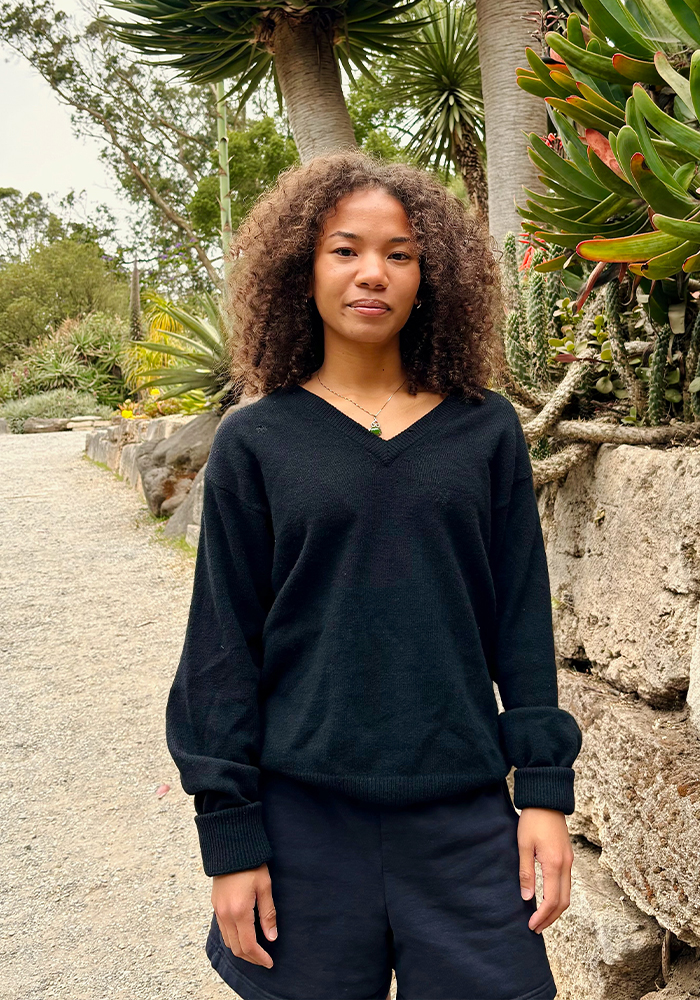 Jolade Adebekun, in her first year of the program, finds inspiration in the succulent garden at Golden Gate Park. A recent transplant from Arizona, the desert landscape feels familiar. Her path to MSTP began in high school, where chemistry and math piqued her fascination with complexity and precision.
As an undergraduate, Jolade designed and synthesized a novel catalyst, igniting a passion for chemical biology – a discipline that merges synthetic chemistry with biological inquiry. At UCSF, she can pursue this niche interest with mentorship from leaders in the field, including Nobel Laureates. Her work may one day yield new molecules that precisely target pathways involved in cancer or neurodegeneration.
For Jolade, the MSTP offers more than world-class training – it offers a place where curiosity is cultivated, and the scientific process is treated as an act of discovery rather than a race to the finish.
“Research is about sitting with uncertainty,” she reflects. “You don’t always know where the path leads until you’ve traveled it.”
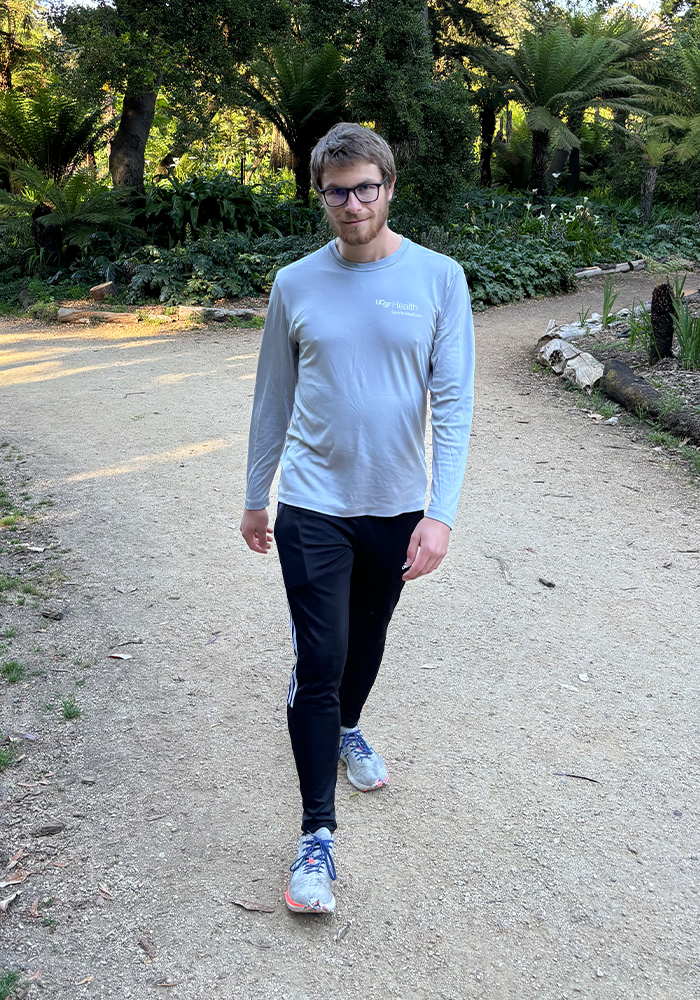 Kai Trepka wants to meet at his favorite running spot near a pond in Golden Gate Park. Clocking in at 50 miles a week, running keeps him grounded during the intense dual demands of medical and doctoral training. His MSTP journey began with a fortuitous phone call with microbiome researcher Peter Turnbaugh – who took the meeting while walking his dog in the park. That call led to a mentorship that continues to define Kai’s scientific career.
Kai’s research investigates how the gut microbiome metabolizes medications like capecitabine, a common treatment for breast and colon cancers. His studies, published in collaboration with Turnbaugh, have uncovered unexpected ways bacterial activity influences drug toxicity and effectiveness – insights that may help personalize treatment and reduce side effects for cancer patients.
“This program gives you the time, support, and freedom to go deep – to ask questions no one’s thought to ask yet,” he says.
From its modest beginnings, the UCSF MSTP has grown into a nationally renowned hub for physician-scientist training. Its expansion has been driven not only by numbers, but by the remarkable depth of inquiry its students pursue – from microbiome research and chemical biology to global health and systems thinking.
UCSF MSTP students are united by a shared drive: to seek truth through experimentation and to bridge the gap between scientific discovery and patient impact. Their work is rarely linear. It demands persistence, intellectual courage, and the humility to follow a question wherever it leads.
As the program continues to evolve, it remains rooted in its founding mission: to train physician-investigators who are as adept with a pipette as they are with a stethoscope – and who understand that the future of medicine lies not just in what we know, but in how we choose to explore the unknown.


