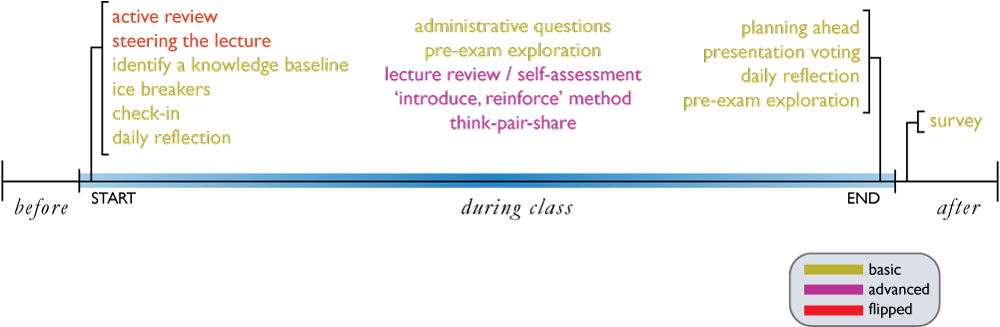
These approaches will get students onboard and participating and don’t require a great deal of advanced preparation.
identify a knowledge baseline - e.g. “Where are you in your educational program?”; “How familiar are you with the subject of this course?”
when: start of class session; often at the first class session of the course
recommended format: multiple choice, open-ended
ice breakers - these are intended to be fun, casual, and give the students a chance to get to know one another.
E.g. “What one word describes you?”, “Are you the first in your family to attend professional school?”, “What area of medicine is of greatest concern to you?”
when: usually at start of class; often at the first class session of the course
recommended type: open response poll, word cloud
administrative questions - e.g. “When is best time for you to attend office hours?”; “who do you contact if you are having attendance problems?”; “How many weeks left until the midterm exam?”
when: any time during class session
recommended type: ranking poll, multiple choice
check-in - e.g. “How prepared are you for class today?
”; “Did you complete the reading?”; “Do you follow up with your study group this past week?”
when: start of class session
recommended type: multiple choice
planning ahead - e.g. “What subject will you be researching for your upcoming paper?”; “What do you have to learn now to be prepared for your clerkship next year?”; “How much time will you spend this week to prepare for the small group session?”
when: end of class session
recommended type: clickable image, multiple choice, open-ended
daily reflection - e.g. “How do you think this discovery will affect medicine in the years ahead?”; “Where will current research take us?”
when: start or end of class session
recommended type: open-ended; multiple choice
presentation voting - all students give a presentation; at conclusion of presentations, students vote on their favorite.
when: end of class.
recommended type: Q&A/Brainstorm, multiple choice
pre-exam exploration - give students an opportunity to raise questions about the exam, the material it will cover.
when: any class session, before an exam
recommended type: open-ended
survey - furnish students with a link to a poll survey at conclusion of lecture. The instructor can share the results of the survey at the next class session.
when: after lecture
recommended type: (using survey view) any