
CASE Labs
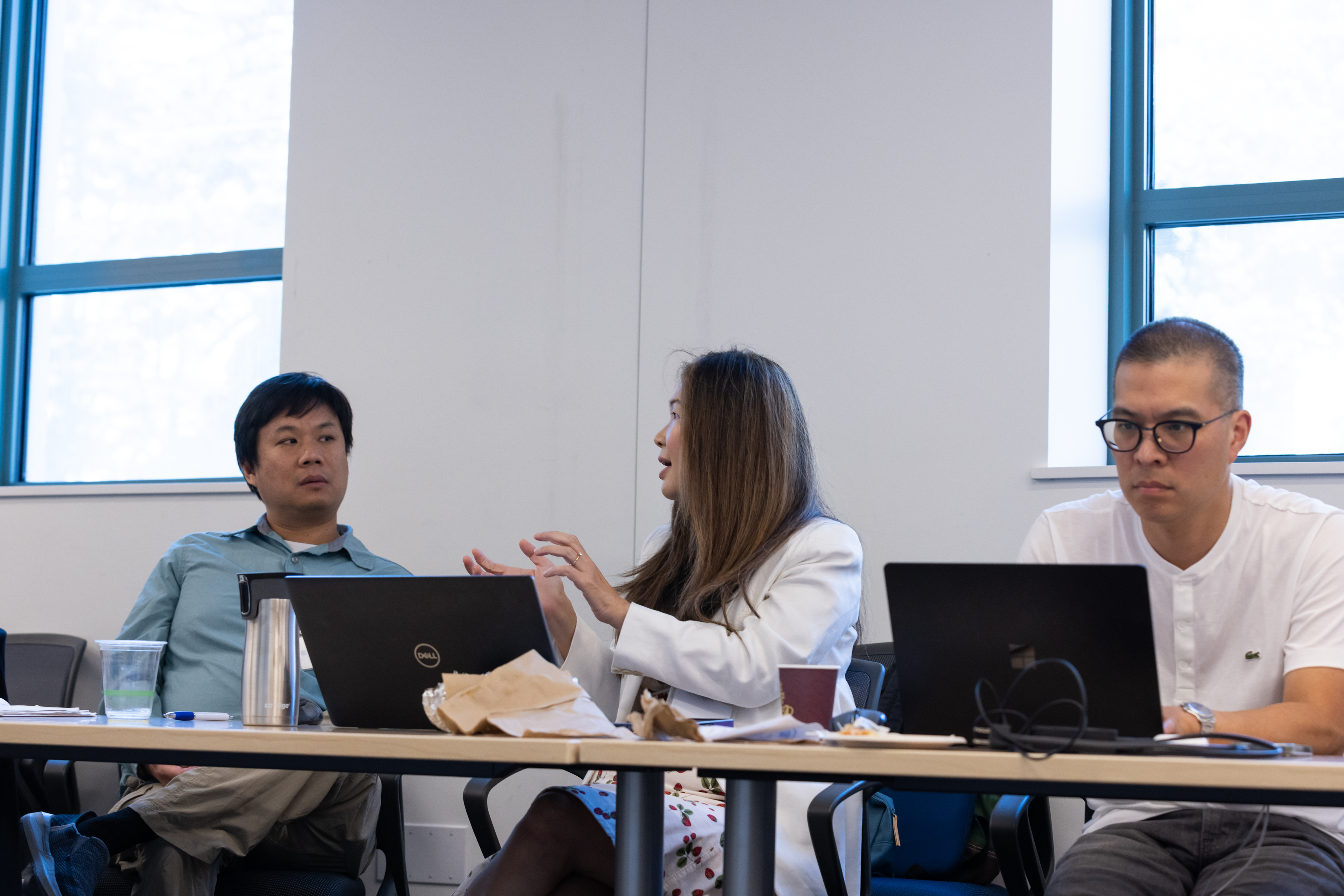
We have developed the CASE labs: Artificial Intelligence Learning, Education Development, Equity and Justice in Education, Planetary Health Education, and Social Dynamics in Health Professions Education.
Learn more about each lab below. Contact information is listed for each.
AI and Learning Lab
Advancing how educators, learners, and clinicians learn, develop, and flourish in an AI-enabled healthcare
What We Do: CASE AI and Learning Lab studies how learners, educators, and clinicians develop their capabilities, identities, relationships, and practices within rapidly changing learning and healthcare environments. Drawing on the learning, organizational, social, and measurement sciences, we design and study educational approaches, professional development, assessment, and human-AI interactions that strengthen, not substitute for, human judgment, agency, connection, and expertise. Our goal is to generate evidence that helps create more effective clinicians, supportive learning environments, and ultimately better patient care.
Our Work:
- Human-AI Co-Learning and Clinical Reasoning — Designing human-AI interactions that promote active sensemaking, productive challenge, reflection, calibrated reliance, adaptive expertise, and durable learning rather than dependence on AI-generated answers.
- Assessment, Capability & Human-AI Competence — Developing approaches to assess foundational human capability, responsible AI use, and human-AI performance while examining skill preservation, resilience, fairness, and the consequences of AI-supported learning.
- Human Flourishing in AI-Enabled Education & Practice — Investigating how educational and AI affect agency, connection, meaningful work, professional identity, patient relationships, and care.
Recent Publications:
- Developing interactive learning interfaces for teaching AI in health professions education using generative AI tools. NPJ Digit Med. 2026 Aug 07; 9(1). Washington P, Muniyappa A, Liang C, Hanmandla KR, Shah H, Martin P, Kadakia R, Burke C, Van Schaik S, Boscardin C.
- Educating the Artificial Intelligence-Augmented Clinician: Theories and Frameworks for Artificial Intelligence-Enhanced Education in Gastroenterology. Clin Gastroenterol Hepatol. 2026 Jul 09. Strauss AT, Boscardin C, Sewell JL. PMID: 42425498.
- The AI Education Void in Internal Medicine Clerkships: From Awareness to Action. J Gen Intern Med. 2026 Jul 07. Burk-Rafel J, Abdulnour RE, Boscardin CK. PMID: 42414803
- Educational Strategies for Clinical Supervision of Artificial Intelligence Use. N Engl J Med. 2025 Aug 21; 393(8):786-797. Abdulnour RE, Gin B, Boscardin CK. PMID: 40834302.
- Multimodal machine learning for staging laparoscopy: a combined image analysis and morphologic tool for the discrimination of peritoneal metastasis. Int J Surg. 2026 Jan 01; 112(1):373-383. Tozzi F, Park HM, Mousavi SA, Van Liefferinge M, Moon D, Fadaei S, Wang JJ, Ashraf Ganjouei A, Romero-Hernandez F, Alseidi A, Adam MA, Ceelen W, Willaert W, De Neve W, Rashidian N
- Machine learning improves post-transplantation HCC recurrence prediction. Liver Transpl. 2025 Nov 01; 31(11):1349-1358. Li PJ, Ashraf Ganjouei A, Syed S, Mehta N, Alseidi A, Adam MA. PMID: 40658766.
Get Involved:
Please reach out if you are interested in getting involved.
Contact us:
Lab Directors: Christy Boscardin, PhD, Adnan Alseidi, MD, and Ralph Gonzales, MD
Lab Researchers: Susannah Cornes, MD, Rishi Kadakia, MD, Lauren Phinney, MD, Anoop Muniyappa, MD, Anya Edwards, MD, Brandon Fennell, MD, Pierre Martin, MD, Peter Washington, PhD, Margaret Robinson, MD, Emily Abdoler, MD (University of Michigan), Yann Hicke (PhD Candidate, Cornell University)
Educator Development Lab
Strengthening the health professions educator workforce through research, innovation, and evidence-based professional development and program design.
What We Do: The Educator Development lab explores questions about how educators refine and improve their practice; educator identity, motivation, efficacy, learning; and the structures, systems, and cultures in which educators and learners are embedded. Using theories and methodologies from the learning, organizational, and social sciences, we seek to advance knowledge that promotes evidence-informed educator practices, curriculum/instructional design, and effective pathways for professional and career development.
Our Work (key areas):
- Faculty engagement in teaching activities and educational roles
- Participation in faculty development
- Educator learning and identity formation
- Evaluation and design of educator development programs, coaching, and institutional support systems
- Educator–learner relationships, feedback processes, trust, and vulnerability in clinical education
Get Involved:
Join our research teams, collaborate on projects, join our works in progress sessions, and journal clubs.
Contact us:
Lab Directors: Tracy Fulton, PhD and Bridget O’Brien, PhD
Lab Members: Sam Brondfield, David Chia, Martha Elster, Erin Green, Sandrijn van Schaik
Equity and Justice in Education Lab
Advancing equitable and just health sciences education, health, and health care.
What We Do: The EJE lab utilizes rigorous educational research methodology to advance equitable, welcoming, and inclusive health sciences education, health, and health care. We produce research that informs practice and policy to address past discrimination and create more equitable and just medical education and practices, with the ultimate goal of advancing health equity.
Our Work Focuses on:
- Utilizing quantitative and qualitative methods to identify and understand educational inequities and their sources
- Examining the outcomes of interventions in assessment, curriculum, and faculty development centered on educational and health equity
- Training educators, educational researchers, and learners to utilize rigorous educational research methodology informed by equitable education frameworks and concepts
- Advancing the adoption of equitable and inclusive evidence-based solutions in opportunity and achievement across the continuum of health sciences education
Leadership and Members
Lab Director(s): Arianne Teherani, PhD, Denise Connor, MD
Lab members: Jessica Abrolat, Miranda Chen, D’Anne Duncan, Shinyi Hsieh, April Edwell, Amber Fitzsimmons, Meghan O’Brien, Yvonne Garcia, Leanna Lewis, Camila Cribb-Fabersunne, Diana Ponce
Get Involved
EJE is open to all interested UCSF students, trainees, faculty, and staff. To learn about joining ongoing projects or participating in activities, please contact [email protected].
Planetary Health Education
Advancing education as a solution to the planetary health crisis.
What We Do: The Planetary Health Education Lab studies how health professions education can address the impacts of climate and global environmental change on human health. We bring together education, communication, and climate and health science, and public health to prepare current and future health professionals to lead in sustainability and environmental stewardship.
Our Work:
- Climate change and health education research
- Faculty development in planetary health education
- Behavior change and sustainability in healthcare
- Policy and systems-level education research
How We Work:
We collaborate across disciplines, initiatives, centers, and sectors, engaging learners, faculty, policymakers, healthcare systems, and community organizations to translate the education research we do into meaningful change for planetary health.
Impact:
Our work leverages education to shape:
- Health professions curricula
- Educator capacity
- Healthcare provider practice
- Policy and systems supporting sustainability
- Global health outcomes
Get Involved:
- Join our research, collaborate on projects, or partner with us to advance planetary health through education. Learn more about our current projects here
- Survey study of planetary health scientists’ adaptive expertise to characterize the responsive changes, the rapidly evolving nature of climate change and health research, with the ability to consider new findings and to develop and test novel solutions with versatile thinking and agility
- Qualitative study of why and how medical students choose to volunteer during extreme weather events, and what role, if any, volunteering during an extreme weather event has on their sense of environmental accountability.
- Qualitative study of medical student volunteers during climate change-induced extreme weather events and the impact of volunteering on students’ mental health.
- Longitudinal qualitative study of climate and health center directors examining the evolution, structure, and impact of climate change and health academic centers in the United States and Canada.
Lab Team
- Lab Director: Arianne Teherani, PhD
- Lab members: Jessica Arbrolat, Miranda Chen, Ryan Tiu, Sheri Weiser, Annie Rosenthal

Social Dynamics in Health Professions Education
Understanding how power, identities, roles, and interactions shape educational and professional practice in healthcare.
What We Do: The Social Dynamics in Health Professions Education Lab examines how social dynamics, including power, identities, roles, conflict, and collaboration, shape education and healthcare delivery. We study how these dynamics persist and change across contexts. By understanding the social and structural influences that shape them, we aim to generate insights that inform educational and professional practice.
Our Work
Areas of focus include:
Get Involved:
The lab is open to interested UCSF learners, faculty, and staff. Join an ongoing research project, bring a project that could benefit from the lab’s expertise and community, or participate in works-in-progress sessions and other lab activities. Please contact Naike Bochatay ([email protected]) to learn more.
Contact: