
Ask Andy
Question #6: “I’m new here and experiencing what can best be described as 'World Cup withdrawal’. Which of the Bay Area sports teams would you recommend I try to see? I know there are some in the city and in nearby San Jose. Even if you’re not a sports guy, maybe you’ve heard good things about live games at one of these franchises? Thanks for any tips!”
I'm feeling a little World Cup withdrawal myself. Last month, I happened to be in Mexico City during the tournament, and you could feel the energy everywhere. Every restaurant had the match on. Bars spilled out onto the sidewalks. Complete strangers celebrated together after goals. My partner and I even had locals stop us to take photos together when we wore Mexico jerseys on game day. There was something special about an entire place seemingly watching the same clock. Back in San Francisco, there wasn’t quite that same feeling when walking down the street, but at watch parties throughout the city the atmosphere was absolutely there.
The good news is that there is an excellent sports scene here. My first recommendation is a Warriors or Valkyries game at Chase Center. The arena is practically part of our Mission Bay campus, and beyond basketball, it's an awesome venue for concerts and other events. I'd also recommend making it out to a Giants game at Oracle Park, as even those who don't follow baseball usually enjoy it. The ballpark sits right on the water, the views are spectacular, and the whole experience feels quintessentially San Francisco. A nice perk for UCSF trainees is that Campus Life Services often offers discounted tickets to these games, as well as to many other local events. You can check out the current offerings at https://campuslifeserviceshome.ucsf.edu/arts-and-events/activities-sports-and-events-discounts.
If you're willing to venture farther south, there are several more major sports teams to check out. San Jose is home to the Sharks (NHL) and the Earthquakes (MLS), while the 49ers (NFL) play nearby in Santa Clara. These are definitely harder to get to on a regular week after work, but they're worth the trek when you get the opportunity.
There are also a ton of ways to participate in sports around the city. Every May, Bay to Breakers transforms San Francisco into something equal parts footrace, costume parade, and public performance art. You don't have to be running to enjoy it; simply finding a good spot along the course and watching the spectacle unfold is a perfectly enjoyable way to spend the morning. The San Francisco Marathon each July is another local tradition--a UCSF fellow won this year! Watching thousands of runners make their way through the city at sunrise is inspiring, and if you're feeling ambitious, I'd challenge you to sign up for even one of the shorter races. Golden Gate Park is the perfect training ground for your next run, just steps away from Parnassus. I particularly love the run out to Ocean Beach. If tennis is more your style, don't overlook the Goldman Tennis Center, also in Golden Gate Park. It's one of my favorite tennis facilities in the city, and every fall it hosts the KPSF Open, where you can watch high-level tennis from just a few feet away.
As a neurologist, I can't resist putting in a quick plug for exercise itself. Regular physical activity remains one of the best things we can do for long-term brain (and I guess cardiovascular) health, reducing the risk of stroke and dementia. Fortunately, this is easy with gyms at Parnassus and Mission Bay, and UCSF residents and fellows (along with their partners) receive 40% off the dual-site monthly fee with no enrollment fee (https://campuslifeserviceshome.ucsf.edu/fitness-and-recreation/membership). There are also plenty of opportunities to play sports in UCSF's recreational sports leagues (https://campuslifeserviceshome.ucsf.edu/fitness-and-recreation/recreational-sports). And if joining a team feels like too much of a commitment, which is often how I've felt during residency, I love dropping into open gym hours instead (https://campuslifeserviceshome.ucsf.edu/fitness-and-recreation/schedules). It's low commitment, a great way to meet people outside your program, and, unlike the World Cup, you don't have to wait another four years.
Question #3: Hi Andy. I, too, am a fan of In-n-Out and love the Taco Bell in Pacifica! Wondering if you have any suggestions for quick, cheap spots around Parnassus, Mission Bay or Mt. Zion. Thanks!
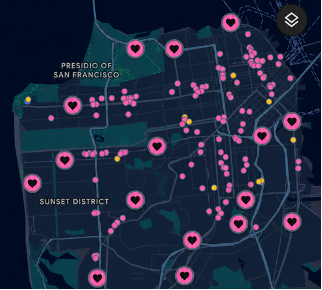
Definitely! One of the best perks of living in San Francisco is just how amazing and diverse the food scene is. I’ve been keeping a running Google Maps list of restaurants since moving here, and at this point there are so many saved spots that zooming in feels a bit like staring at a constellation. So many stars, so hard to pick which one to recommend.
Parnassus
I have to give a shoutout to the Ladle & Leaf at Parnassus. Since relocating to its current spot, it’s quietly become one of the most reliable quick options on campus (and it takes FastPay). Fresh, customizable salads, soups, and sandwiches, consistently fast, and with an unbeatable view from its renovated sunny seating area.
Just a short stroll down, 9th Ave has really been on a roll lately:
- Tadaima: A beloved Japanese café from the Mission that’s made its way to Inner Sunset, known for its matcha drinks and pork katsu sandwich.
- Fiorella: A great gathering spot for pizza and pasta. I highly recommend going upstairs to the heated outdoor rooftop patio, which also works well for larger groups.
- Sweet Glory: Some of the best crepe cakes I’ve ever had, available by the slice.
Mount Zion
I admittedly do not come here for my rotations, but Pac Heights is full of amazing restaurants. If you’re with a group or looking for something a little more substantial, Daeho is worth a stop. Their kalbijjim is iconic and very shareable (get it with the cheese and purple rice!).
Mission Bay
You’ve probably already been to SPARK Social SF at some point for a residency social. Tons of variety with its park of rotating food trucks, always something new to try, and a fun, easy atmosphere for groups.
Whenever I’m at Mission Bay, I usually end up spending most of my meal card money at Publico Urban Taqueria. Everything is made fresh, and their daily specials are reliably good.
ZSFG
Not exactly in the three zones you mentioned, but I have to put in a plug for Lucky Coffee at ZSFG. It’s a small, family-run takeout counter on the first floor of Building 5, easy to miss if you’ve never taken that right turn before the elevators. They now take FastPay, and I often find myself grabbing both my morning coffee and lunch there. Try their mango, I’ve heard they ripen them in their basement for weeks to get that amazingly sweet taste.
