
Leading with Purpose: LaTasha Mitchell Assumes New Role with Post Baccalaureate Program
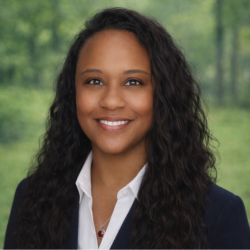 LaTasha Mitchell lights up when she talks about the UCSF Post Baccalaureate Program (PBP). Her enthusiasm is contagious, her conviction unmistakable. For Mitchell, her new role as associate director of PBP and outreach for Medical Education is more than a job — it’s a calling shaped by lived experience and a belief in the power of education to transform lives.
“I grew up in the Bay Area, so I’m a product of the community,” Mitchell explains. “After graduating high school, my siblings and I were expected to work to support the family. College wasn’t a possibility. I was in my late 30s when I got my bachelor’s, and in my 40s when I earned my master’s degree.”
Witnessing firsthand how education can change lives, Mitchell pursued a career focused on empowering others. She has worked for nonprofits committed to educational access and has been integral to the PBP team for more than half of the program’s 28-year history. Since its inception, PBP has helped 325 students from under-resourced and first-generation backgrounds launch their journeys to medical school; 93% have matriculated.
A fierce advocate for social change, Mitchell says the students are at the heart of her long-term dedication to the program.
“They bring so much energy and fresh perspective. I just want to be a source of good every day and be conscientious about having a positive impact on others — even if it’s just telling someone, ‘You’ve got this.’”
Over the years, Mitchell has supported students at every stage of their journey — from encouraging college students from under-resourced communities to apply to helping learners navigate the rigors of medical training. She has watched students arrive with talent and determination and leave with confidence, preparation, and a deep sense of belonging in medicine.
“From the moment you read their applications, you’re impressed by what they’ve already accomplished,” she says. “And then you see who they become.”
For Mitchell, the impact of PBP doesn’t stop with an individual student’s success — it ripples outward into families and entire communities. She often points to alumni who have built practices rooted in the same values they cultivated during their time in the program.
She recalls one PBP alum, Amna Khan, MD ’09, a pediatrician who returned to her community to build a practice that reimagines traditional clinical care. Patients have access to wraparound support services, from mental health resources to community-based supports. Khan’s commitment to health equity extends beyond her clinic through her online platform, The People’s Pediatrician, which connects champions of peace, equity, and justice. For Mitchell, this is PBP’s mission in action.
“When you support one student, you’re not just changing one life,” she explains. “You’re supporting a physician who will go on to care for thousands of people, often in communities that have long been underserved.”
That belief — that education is a lever for broader societal change — is authentic to Mitchell’s personal journey and central to her leadership. She sees PBP as both a launchpad and a responsibility: a place where future physicians are prepared not only for medical school, but for lives of service and impact.
In her new leadership role, for which she was appointed following the retirement of longtime founding director Valerie Margol, Mitchell is particularly excited to strengthen alumni engagement and ensure that graduates feel connected, valued, and invited back into the program’s life.
“I love seeing our alumni out there changing things on a systemic level,” she says. “It matters for our current students to see what’s possible and for our alumni to know how deeply they’re still connected to this place.”
Mitchell’s approach to leadership is steady, reflective, and deeply human. She believes in encouragement, in showing up with intention, and in building structures that allow people to thrive. Under her leadership, PBP will continue to honor its legacy while embracing new energy, new partnerships, and new opportunities for impact.
“This program has maintained its heart and soul,” she says. “Now it’s about making sure it’s not UCSF’s best-kept secret and that it continues to change lives and communities for generations to come.”
